Advertising Business Models That Depend on AI Conversation Data
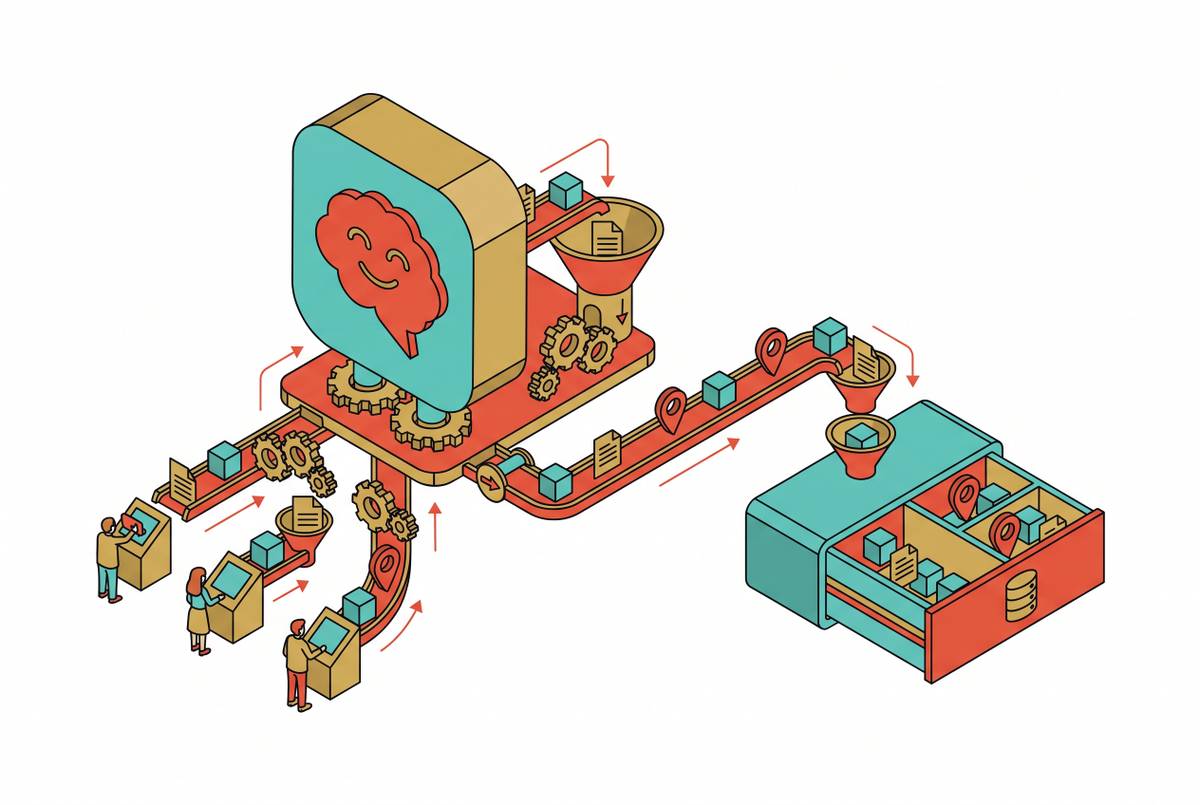
The rush to monetize AI conversations is creating a richer data asset than search engines ever had.

The math behind free AI chatbots does not work, at least not yet, and that gap is the reason advertising has arrived so quickly inside tools built to answer questions, not sell products. Nearly all consumer AI usage happens on free tiers, which means the companies building these systems are absorbing the cost of every query without a matching payment on the other side. That would be manageable if the cost per query were trivial. It is not: a single large, context-rich ChatGPT request can cost OpenAI more than a user pays across an entire month of subscription fees, assuming that user pays anything at all. Scale doesn't fix that problem, it amplifies it, because more usage under a subsidized model just means more money going out the door.
So another revenue stream has to fill the gap, and advertising is the most obvious candidate because the audience is already moving. Search clickthrough rates fell nearly 30% between April 2024 and April 2025. Advertisers have noticed. A large majority report seeing early or significant shifts in consumer behavior away from traditional search and toward AI-powered answer engines, the same research found. Attention is migrating, and ad spending follows attention the way it always has, just on a new surface.
What makes this moment distinct from prior platform shifts is the speed of the money involved. AI-powered ad spending is projected to grow 63% in 2026, reaching $57 billion, compared to far more modest growth for the advertising industry overall. That is not incremental growth, it is a reallocation, and it explains why companies that spent years insisting they'd never run ads are now building the infrastructure to do exactly that.
Conversation data versus banner and search ad data
To understand why this shift matters beyond the balance sheet, it helps to look at what these companies actually have to sell. In traditional digital advertising, the content exists first: an article gets published, a search results page gets rendered, and the ad slots in beside it as a visually distinct layer. Readers learned that boundary decades ago, the way anyone learns to tune out a billboard on a familiar drive. A chatbot breaks that boundary because there is no pre-existing content for an ad to sit next to. The answer is generated in real time, in direct response to what the user typed, which means the "page" an advertiser wants to appear on doesn't exist until the user creates it.
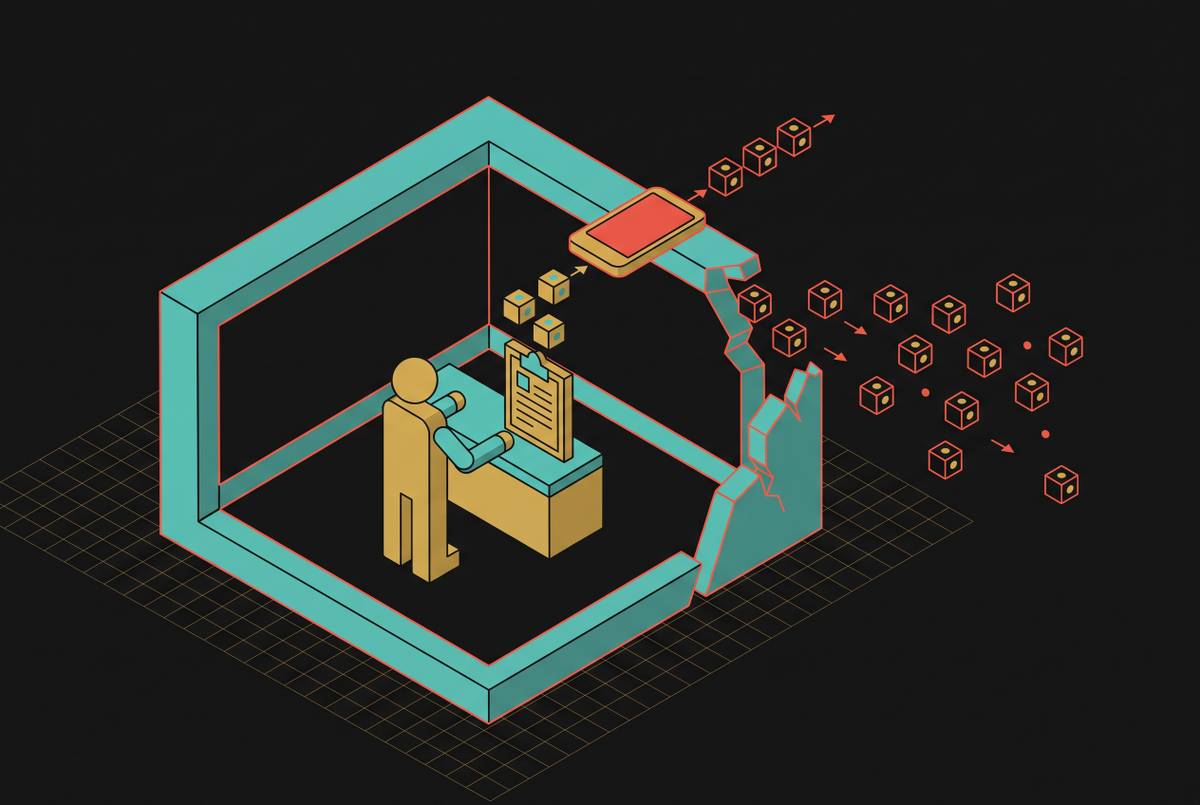
That's a strange asset to build a business around, but it is a valuable one, because what the user creates is remarkably rich. Chatbot interactions are conversational, and they can involve contextual detail that goes well past anything a person would type into a search bar. Nobody types "debt consolidation options for someone with two kids and a variable-rate mortgage" into a search box. People do type something close to that into a chatbot, because the interface invites elaboration rather than keyword compression. A user asking an AI how to manage debt, which medication to consider, or how to plan a divorce is disclosing intent and circumstance in the same breath. Search engines never got that; they got fragments.
That distinction is precisely the one drawn by Wharton and Emory researchers Erik Hermann, Stefano Puntoni, and David A. Schweidel, whose paper "From Advice to Advertising" identifies three separate monetization logics running through digital media. Search engines monetize intent. Social platforms monetize attention and engagement. Conversational AI, the researchers argue, monetizes something new: inclusion within the conversational output itself. An ad is no longer parked beside an answer. It can become part of how the answer takes shape, or what the answer ends up recommending, which is a fundamentally different kind of commercial placement than anything banner or search advertising ever offered.
How ChatGPT's advertising model is structured
OpenAI is the clearest place to watch this logic get built into an actual product, partly because of how large the company has become and how fast it moved. OpenAI completed its conversion to a for-profit public benefit corporation in late October 2025, with the non-profit OpenAI Foundation retaining a significant stake and Microsoft holding a substantial share of the resulting business; by February 2026, annualized revenue had reached a substantial level. Advertising, in other words, is an addition layered onto a company whose core business is already sound. It is an addition to a business that already generates considerable subscription income, layered on top rather than substituted in.
The advertising pilot itself launched on February 9, 2026, for logged-in adult users on the Free and Go plans. Subscribers on Plus, Pro, Business, Enterprise, and Education tiers see no ads at all. The early revenue signal backs that up. OpenAI reportedly brought in $100 million in the first six weeks of advertising, which is not a soft launch number, it's evidence of immediate, pent-up advertiser demand.
The targeting mechanism is more restrained than the phrase "AI advertising" might suggest. Ads are primarily contextual, matched to the topic of the current conversation, with select personalization signals drawn from a user's broader ChatGPT history only if that user opts in. There is no demographic or interest-based targeting available to advertisers, though geographic targeting is offered. Placement is equally constrained on paper: sponsored links appear below ChatGPT's responses, clearly labeled "Sponsored," and OpenAI states the ads never appear inside the model's answer and never influence what the model says. The company also describes a hard technical separation, with ad serving running on systems distinct from the chat model itself, so that only aggregated figures, total views and clicks, reach advertisers, with no individual-level attribution. OpenAI has also stated that conversations remain unsold to advertisers, with the commercial value on offer being conversion.
Sensitive categories get extra friction. Financial services, healthcare, and legal advertising require manual, case-by-case approval, and OpenAI states it screens against placements in emotionally reliant or sensitive user journeys, excluding categories like child safety, political content, self-harm, and weapons entirely. A separate track altogether is ecommerce: announced in October 2025 in partnership with Stripe, alongside Etsy and Shopify, aimed at letting users complete purchases inside a chat. That effort hit integration roadbumps with early partners as of January 2026, a reminder that the commerce layer and the advertising layer are related projects, but not the same project, and they're progressing at different speeds. By April 2026, a self-serve ads manager was quietly launched in beta with a $50,000 minimum spend, open to advertisers willing to meet that threshold. The scale of the platform is defined by billions of daily prompts and a 73% market share in AI chatbots.
Google and Meta: two different approaches to using conversation data for ads
Google expanded ads into AI Overviews on desktop in May 2025 and has since launched ads within AI Mode, its conversational search experience. Sponsored content now appears alongside roughly a quarter of all AI-generated answers on the platform. That's a meaningful share of Google's search surface area, given how much of the company's revenue still runs through search advertising.
Gemini is a murkier story. In December 2025, Google's VP of advertising Dan Taylor denied reports of ads inside the Gemini app outright: "There are no ads in the Gemini app, and there are no current plans to change that." Since then, testing of sponsored answers within Gemini conversations has been reported anyway, which leaves the official position and the observed behavior somewhat out of step. Its brand safety tooling is more mature and comprehensive than ChatGPT Ads, letting advertisers exclude content categories, specific topics, and certain types of AI-generated content. And on commerce, Google is taking a different cut than OpenAI: rather than take a percentage of transactions originating in Gemini, it plans to sell advertisers the placement itself, the opportunity to have a product surfaced for in-chat purchase.
Meta sits at the opposite end of the spectrum, and here is why. On October 1, 2025, Meta announced that starting December 16, it would use chatbot interactions across Facebook, Instagram, and WhatsApp to inform ad targeting and personalization. That is the most aggressive data-use posture of any major platform in this comparison, because Meta is using the actual content of a conversation to build a targeting profile, not just its topic to pick a contextual ad category. It's proposing to feed the actual content of conversations into a targeting profile that persists beyond that single exchange. Advocacy groups pushed back hard enough to call for an FTC investigation, arguing that conversational data is substantially more sensitive than ordinary behavioral data: it may reveal personal relationships, mental health concerns, political views, and other intimate information. Microsoft Copilot has also tested advertising, folded into Microsoft's existing Performance Max campaign infrastructure, though there isn't enough public detail yet to say much about how its data practices compare.
Line these three up (the three distinct monetization logics in digital media identified by Wharton/Emory researchers Erik Hermann, Stefano Puntoni, and David A.), and a spectrum appears. Google leans toward contextual and aggregated, OpenAI is in the middle with contextual targeting plus opt-in personalization, and Meta has committed to the far end, treating conversation content itself as a durable targeting signal rather than a momentary contextual cue. Google's privacy approach in 2026 is shaped by years of regulatory pressure and the transition toward Privacy Sandbox technologies, with targeting increasingly based on on-device signals, contextual analysis, and aggregated audience models rather than individual user tracking.
Perplexity's advertising experiment and its pullback
Perplexity's story matters because it's the clearest test case of what happens when a platform pushes advertising as deep into the model's output as it can go, and then decides that was a mistake. Perplexity became one of the first AI search platforms to test sponsored placements, starting in 2024. It introduced Sponsored Questions in November 2024 and brought on brands including Whole Foods and Indeed through early 2025. Two formats ran side by side: sponsored follow-up questions inside the "Related Questions" section, and video ads placed alongside answers, labeled sponsored.
The sponsored-question format deserves close attention, because it's the sharpest example anywhere in this landscape of an ad not sitting beside an answer, but triggering one. Click a sponsored question, and the AI generates its response from advertiser-approved content. That's a structurally different arrangement than a labeled card underneath a response. The ad isn't adjacent to the output, it's the input that produces the output, which makes advertiser influence on what the model says about as direct as it can get without literally editing the model's weights.
By February 2026, Perplexity had discontinued the whole AI-integrated advertising strategy and moved to a subscription-first model instead. Leadership framed the decision as protecting user trust in what the company calls its "answer engine," choosing to prioritize the perception of objectivity over the ad revenue on the table. That decision wasn't made from a position of weakness, either, which is what makes it notable. A company retreating from ad revenue while its usage and valuation were both climbing is evidence that the trust risk here isn't hypothetical, it was real enough to walk away from real money. Perplexity now markets itself alongside Anthropic's Claude as an ad-free alternative to ChatGPT and Google. Separately, in December 2025, the New York Times sued Perplexity over alleged copyright infringement tied to the use and reproduction of its journalism, a distinct legal pressure but one that compounds what an "answer engine" owes the sources it draws from. At the time of the decision, the scale context included approximately 780 million queries monthly as of May 2025, rapid month-over-month growth, a large and growing user base, substantial annualized revenue, and a valuation of $20 billion following a funding round in September 2025.
The formats advertisers use inside these systems
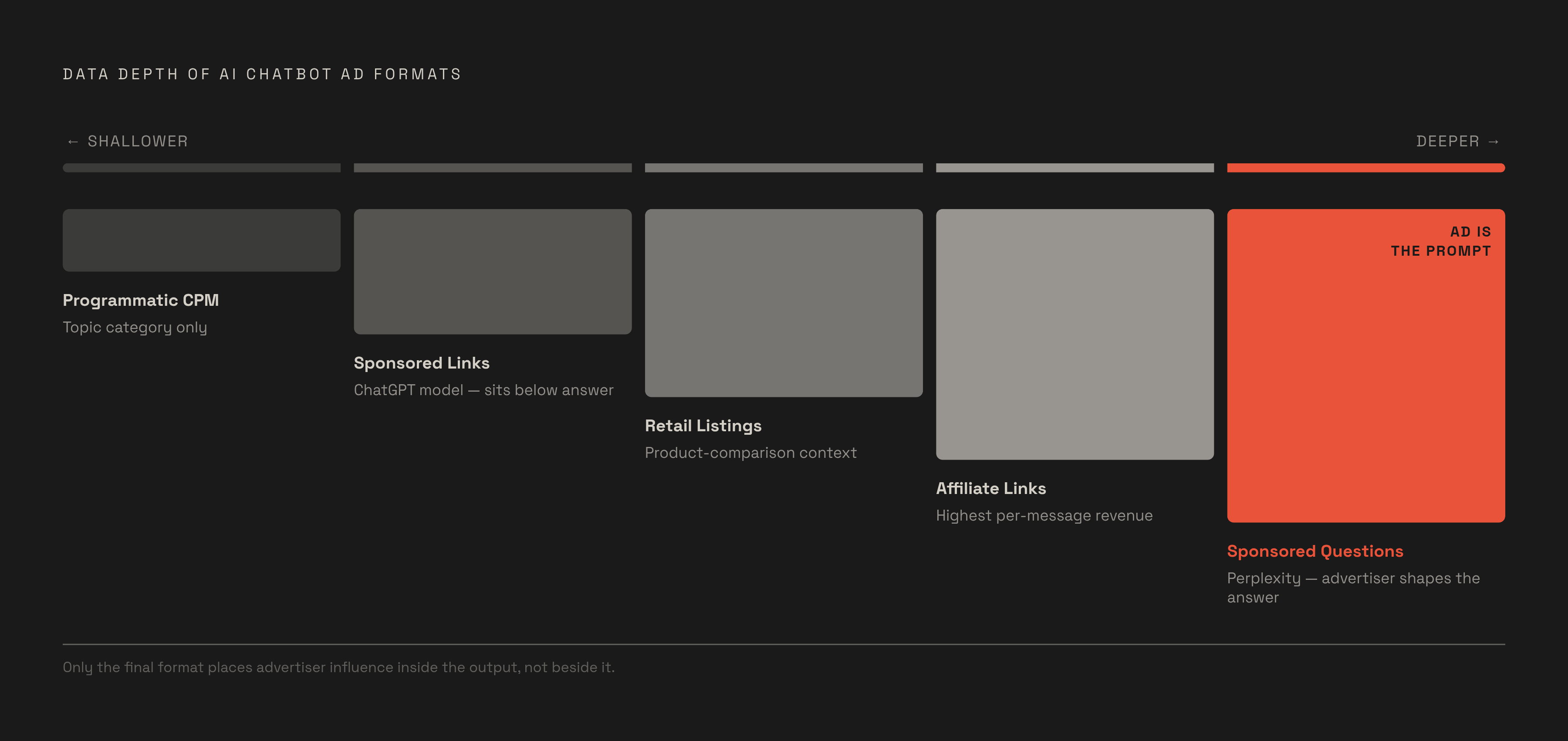
Step back from any single company and a rough taxonomy of ad formats emerges across the ecosystem in 2026. At one end sit static sponsored links, labeled cards placed below a chatbot's response, which is the model ChatGPT uses: the ad sits beneath the answer, separated by a visible label. Further along the spectrum are sponsored follow-up questions, Perplexity's former approach, where the ad functions as a prompt that pulls AI-generated content from advertiser-approved sources, making this the format where advertiser influence enters the output most directly. Retail-style in-chat listings occupy a related space, surfacing promoted products inside product-comparison conversations, and affiliate links embedded directly in responses reportedly generate the highest per-message revenue for smaller chatbot developers working with thinner margins. Programmatic display alongside answers, priced on a cost-per-thousand-impressions basis, is closest to the traditional banner model and asks the least of conversation data. Conversational ad formats, interactive exchanges where a user moves through several questions and responses before converting, are seen by industry observers as an emerging format suited to lead generation and complex purchase decisions.
What separates these formats isn't how they look, it's how much conversation data each one actually uses. A CPM display ad only needs the conversation to determine a topic category, nothing more. A sponsored-question format routes the user's expressed interest directly into an advertiser-controlled answer, which is a categorically deeper use of the same underlying data. The formats are new. The plumbing that produces them, in large part, does not match. Both ChatGPT and Google approaches appear to closely follow how advertising technologies currently work, including real-time bidding and microtargeting, per the TechXplore/Conversation researchers writing in September 2026.
The structural difficulty of verifying the "ads don't influence answers" claim
OpenAI, Google, and other companies in this space have all said, in one form or another, that advertising does not alter what their models generate. That's a meaningful commitment, and there's no particular reason to think it's made in bad faith. But how would anyone outside these companies actually confirm it? Advertising technology has always been difficult to audit from the outside, and AI systems make that problem worse, because verifying the claim requires access to both the underlying data and the model itself, neither of which outsiders have.
Preventing paid influence from shaping AI-generated answers remains largely voluntary, and depends entirely on AI companies honoring the promises they've made, per the TechXplore and Conversation researchers' September 2026 analysis. That's not a criticism of any particular company's intentions; it's a description of the structure itself. Voluntary compliance can be sincere and still be unverifiable, and those are two different things that get conflated too easily. The same researchers go further, arguing that AdTech companies have a track record of using technical complexity to keep outside oversight at bay, a pattern established well before generative AI existed and one that's now migrating into these newer systems.
There's a useful historical echo here. The Brin/Page warning from Google's founding paper, that ad-funded search engines are "inherently biased toward the advertisers and away from the needs of the consumers," is now being replicated in AI, as the TechXplore researchers note. One might argue that clear labeling solves the problem. It doesn't, not entirely: the NAI's analysis identifies a specific design challenge here, that even with visible labels, users may struggle to tell advertising apart from organically generated information when both appear inside the same conversational flow.
The downstream risks researchers flag go beyond any single user's confusion. Larger corporations could buy preferential visibility inside these systems, while smaller firms face a pay-to-play barrier that pushes markets toward further concentration. If microtargeted ads get woven into private conversations, misleading messages could reach individuals without any of the public scrutiny that accompanies traditional political advertising, a phenomenon researchers describe as "dark money" in AdTech. And the defenses built over the past decade to fight disinformation, largely designed around public social feeds and search results, were not built with private AI conversations in mind.
User exposure and the privacy implications of the data dependency
Bring this back to the person actually typing into the box, and the stakes get more concrete. The chatbot interface is built around ongoing, direct dialogue, and that means interactions routinely involve contextual detail that goes well past what anyone types into a search bar. A search query is a fragment. A chatbot conversation is closer to a confession, and users treat it that way, whether or not the platform is built to hold onto what gets said.
Someone describing medical symptoms, financial trouble, a struggling relationship, or a political opinion is disclosing that information inside a space that feels private and assistant-like, not inside something they'd recognize as an advertising environment. That perception gap is exactly what makes the data so valuable and exactly what makes its use so fraught. Meta's October 2025 announcement is useful precisely because it says outright what most other platforms leave unstated: conversation content doesn't have to stay confined to the conversation it came from, it can become an input into a targeting profile that follows a user well past that one exchange. Whether other platforms move in that direction, or hold the line at contextual, in-the-moment signals the way OpenAI and Google currently describe, is likely to be the question that decides how much people are willing to say to these systems going forward.