Government Demands for AI Provider User Data
Warrants for AI data remain legally unsettled and inconsistently enforced.
Most AI users do not think of a conversation with a chatbot as a record. The law on who can demand those records, and under what standard, is still taking shape. This article maps the two channels through which governments reach AI user data, what determines whether a warrant is required, and where the gaps remain.
How AI providers store user conversations and why that creates a legal exposure most users don't anticipate
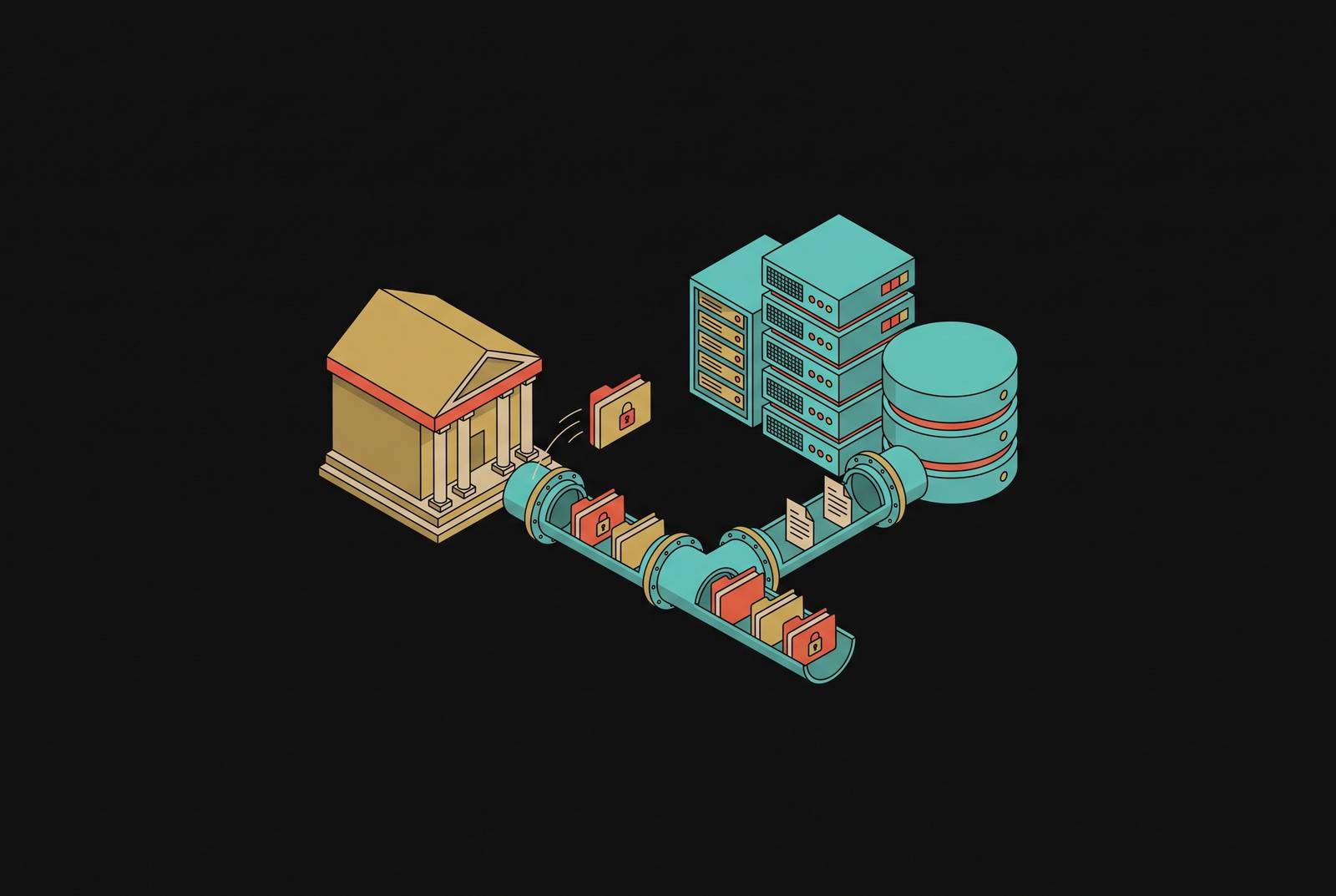
Users have replaced traditional search engines with AI chatbots for precisely the kinds of inquiries they once would have hesitated to type anywhere: legal questions about divorce or bankruptcy, personal health disclosures, research into politically sensitive topics. The prompt and the model's response are stored together, tied to an account identifier, and the larger the model's context window, the more comprehensive that record becomes. The stored conversation is a structured, searchable account of what a person asked, when they asked it, and how the model replied.
The critical point is that this storage is not a policy choice any single provider made. It is a structural feature of how hosted AI models work. The exposure is not an accident layered on top of the technology. It is built into the architecture.
The two legal channels through which governments can reach those records
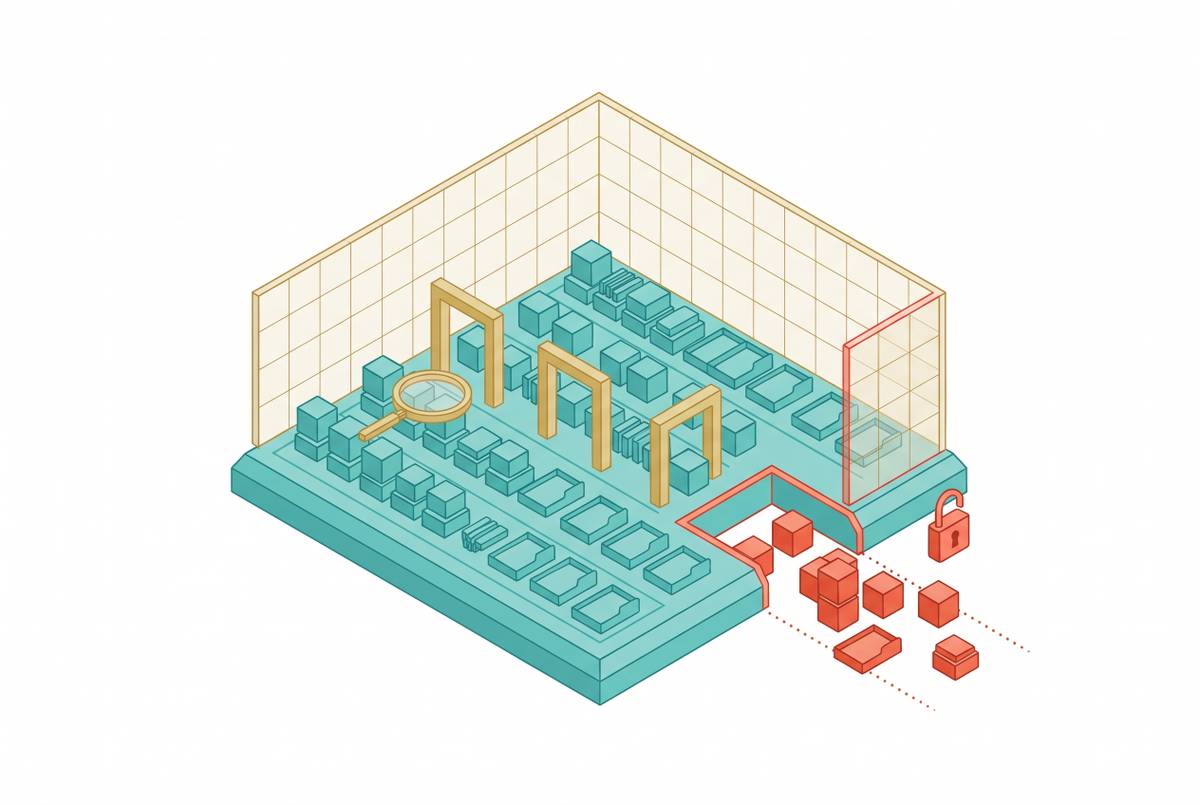
Government access to AI user data runs through two separate channels, and they operate under different legal rules with different levels of constitutional scrutiny. The first is individualized legal process: a subpoena, court order, or search warrant served directly on the AI provider, demanding records tied to a specific user or a defined set of prompts. This channel looks familiar because it resembles conventional law enforcement practice. It requires the government to name what it wants, justify its request before some legal authority, and wait for the provider to respond.
The second channel is bulk acquisition, and it does not touch AI providers at all. The government purchases commercially available data, including geolocation, browsing history, and behavioral records, from data brokers, then applies AI systems to that purchased data. No warrant is sought because none is required. The difference is what legal threshold the government must clear to get there, and in one channel that threshold is essentially nonexistent.
How individualized legal process works: subpoenas, warrants, and what providers are required to hand over
The governing statute for the first channel is the Stored Communications Act, a law written decades ago for a world of dial-up email and bulletin boards. AI providers seem to be electronic communications service or remote computing service providers under the SCA, so the government has to clear specific legal thresholds before it can get user data. But those thresholds vary sharply depending on what type of data is sought. Non-content account information such as names, addresses, payment data, and account identifiers can be obtained with a subpoena, the lowest legal bar. Legal analysis of the statute's application to AI models argues that user prompts and model responses qualify as "contents of electronic communications." The government's own warrant affidavit in the first known federal warrant to OpenAI implicitly endorsed that position by citing the SCA sections governing content.
That warrant, sought by Homeland Security Investigations, asked OpenAI to identify the user behind specific prompts, including conversation history, names, addresses, and payment data, in a child exploitation investigation. The court ruled the logs were ordinary discoverable records. The first channel, in other words, is already operational, and courts are treating AI conversation data as evidence like any other.
What providers say they will and won't do when a government demand arrives
Provider policy sets a floor that may be higher than the legal minimum, but published policies reveal meaningful differences in how much protection users can actually count on. OpenAI's published policy, effective January 1, 2026, states that it requires a subpoena, court order, or search warrant before disclosing non-content user information, and discloses content only in response to a valid warrant or equivalent. It also commits to notifying users before disclosure unless the law prohibits it, and to providing delayed notice after nondisclosure orders expire. That policy turns the SCA's warrant requirement for content into an explicit, written commitment, and it adds a notice commitment the statute does not itself require.
Analysis of xAI's policy identifies a meaningful gap. xAI requires only "appropriate legal process such as a subpoena, court order, or warrant," a formulation that does not distinguish content from non-content. The practical difference between the two policies is substantial. A user assessing their exposure at the provider level must read the fine print, because the word "content" and the word "warrant" either appear together in the policy or they do not.
There is a third scenario no policy addresses. A provider can lawfully report content to law enforcement on its own initiative, and no warrant requirement constrains that decision. The provider holds the data and can act on it unilaterally. This is a structural feature of the provider relationship, not a policy failure that a better written terms of service could cure.
Why the warrant question is still genuinely unsettled for AI conversations
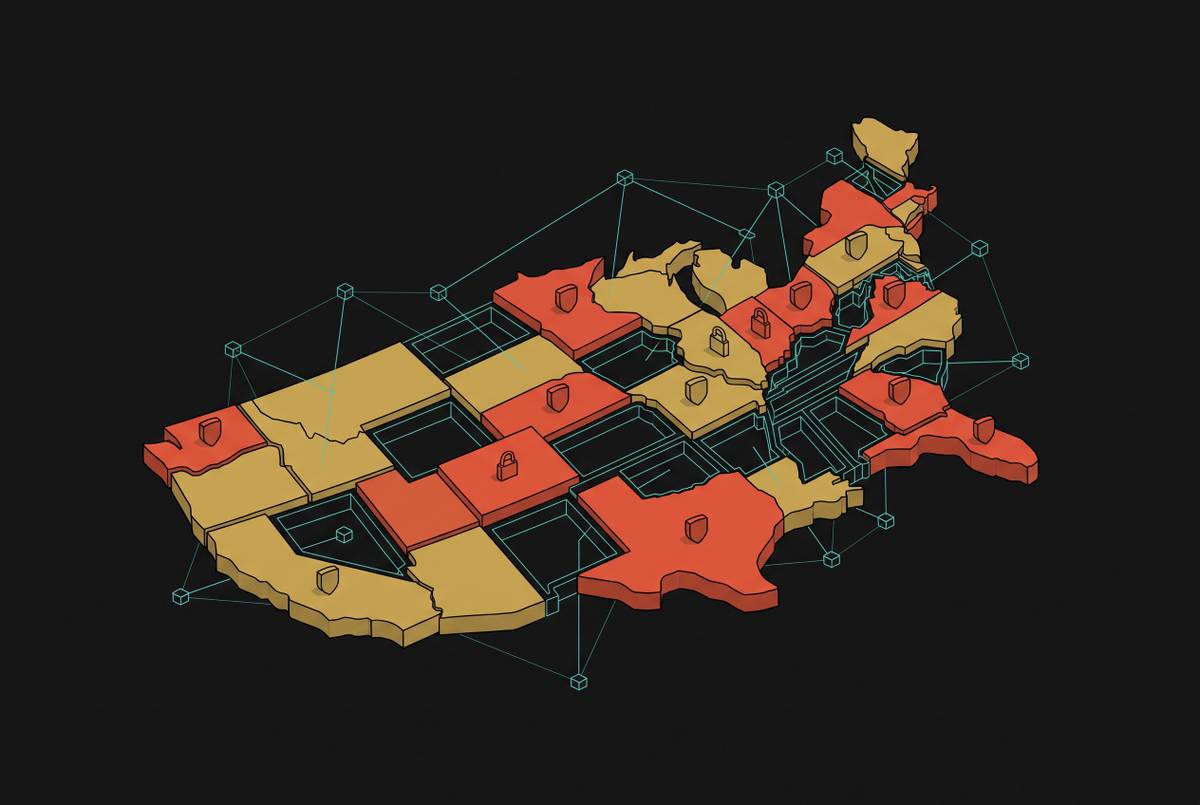
The application of the SCA and the Fourth Amendment to AI conversations is a question of first impression in most jurisdictions, and the early rulings are inconsistent enough that users cannot rely on a settled legal protection. In United States v. Heppner, No. 25 Cr. 503 (S.D.N.Y.), Judge Jed Rakoff ruled from the bench on February 10, 2026, and issued a written opinion on February 17, 2026, holding that a criminal defendant's written exchanges with a generative AI platform were protected by neither attorney-client privilege nor the work product doctrine. On the same day as the Heppner ruling, a Michigan magistrate judge reached a different outcome in a similar question. The two decisions came out on the same day in different federal courts and point in different directions.
The doctrinal difficulty runs deeper than case-by-case disagreement. The SCA's distinction between electronic communications services and remote computing services, which determines what level of process is required for what data, has long been criticized as unworkable for modern internet services. The statute offers no clean answer because the technology it describes shares little with the technology at issue. The Supreme Court is expected to address related questions about reverse searches in Chatrie, but whether that ruling will resolve the AI-specific issues is uncertain. The warrant requirement for AI conversation content today rests on legal argument and agency practice, not on binding precedent. That is a meaningful gap between the protection users assume exists and the protection the law currently guarantees.
The bulk acquisition channel: how the government reaches AI-era data without touching AI providers
The most expansive avenue for AI-assisted surveillance of Americans does not run through AI providers at all. It runs through commercial data brokers, and their records are not subject to the constitutional restrictions that apply to government collection. EPIC's analysis identifies the mechanism plainly: the government purchases detailed records of Americans' movements, web browsing, and associations from commercial sources, because information it buys is not treated as information it "collects" for Fourth Amendment purposes. The Fourth Amendment's warrant requirement attaches to what the government seizes or compels, not to what it purchases on the open market.
Applying AI to this purchased data changes the calculus dramatically. Individually innocuous data points, a hardware store visit, a web search, a location ping, can be assembled automatically and at scale into a comprehensive profile of any person's life, including inferences about religious beliefs, medical conditions, political associations, and relationships. When acquisition is what matters, AI-assisted bulk profiling sits outside the surveillance envelope even when the practical outcome is indistinguishable from it.
The Anthropic and Department of Defense dispute made this concrete. Talks collapsed after the Pentagon sought to use Anthropic's AI for "the collection and analysis of unclassified, commercial bulk data on Americans, such as geolocation and web browsing data." The Pentagon subsequently announced deals with seven AI companies, SpaceX, OpenAI, Google, NVIDIA, Reflection, Microsoft, and Amazon Web Services, and later confirmed Oracle as an eighth partner, to deploy their AI on the Department's classified networks for "lawful operational use," without the usage restrictions Anthropic had insisted on. The dispute was not about whether the government could buy broker data. The government's position, and the deals that followed, indicate how the second channel is expected to operate.
How the foreign intelligence channel adds a second warrantless route to Americans' AI-era communications
Section 702 of the Foreign Intelligence Surveillance Act authorizes targeted surveillance of non-U.S. persons located outside the United States to collect their communications. The authority is foreign-intelligence in form, but it incidentally sweeps in Americans' communications whenever an American corresponds with a foreign target. The government claims it can search those incidentally collected communications without a warrant, and civil liberties advocates call that the backdoor search loophole. So there is a second warrantless route to Americans' private communications, legally distinct from the data broker channel but producing similar exposure.
EPIC's analysis notes that Anthropic reportedly granted a limited exception to a small number of national-security customers permitting its AI to be used for foreign intelligence analysis, including Section 702 data that incidentally includes Americans' communications, even while refusing the data broker use case. The contrast is instructive. The two channels are legally distinct, and companies may draw the line in different places. AI applied to Section 702 databases has the same amplifying effect as AI applied to broker data. A bipartisan coalition in Congress has moved to require warrants for searches of Americans' data within Section 702 databases, citing Fourth Amendment concerns and, in some arguments, AI's ability to search through the accumulated data as reasons the existing rules are no longer adequate. As of the sources' reporting, a Section 702 reauthorization with meaningful warrant requirements had not passed.
What actually determines whether a warrant is required — and the gaps where it isn't
Whether a warrant is required turns on three variables: what type of data is sought, through which legal channel it is accessed, and which provider holds it. A warrant is required for far less of that data than most users assume. At the provider level, non-content account identifiers such as names, addresses, and payment data require only a subpoena. Content, the actual text of prompts and responses, requires a warrant under the SCA as currently interpreted, but that interpretation is contested and not yet settled by binding appellate or Supreme Court precedent. No warrant, subpoena, or court order is required, because no legal process is being used.
The remaining channels require no warrant at all. The practical result is that only a narrow band of the exposure, content-level data sought through individualized legal process at a provider that sets a warrant standard, is covered by anything resembling a robust legal protection. Even that protection is subject to provider policy variation and unresolved legal questions. Everything else sits in the gaps.
Why architecture, not policy, is the only reliable answer to exposure at the provider level
Legal process can only reach data that exists. If an AI provider's architecture does not store user conversations in a retrievable, provider-accessible form, there is nothing to subpoena, warrant, or voluntarily disclose. The policy is only as durable as the company's willingness and legal ability to enforce it, and a policy can be changed, narrowed, or overridden by a later legal obligation.
Voluntary disclosure is the clearest illustration of this limit. A system designed so that conversation content is not retained in provider-accessible form cannot be compelled to produce what it does not hold. This is not a policy choice that can be reversed. It is a structural feature of how the service works, and it is the only provider-level mitigation that addresses the exposure at its source.
What users can and cannot control about their exposure across both channels
A user's practical exposure runs across both channels simultaneously, and the two channels respond to different mitigations. At the provider level, you can reduce exposure by choosing a provider whose architecture does not retain conversation content in a provider-accessible form, so the provider is not a vector for legal process. A user should also understand that deleting conversation history on a platform does not necessarily mean the provider no longer holds the data. Retention policies vary, and deletion may not be immediate or complete.
The honest limitation is the bulk acquisition channel. The legal framework governing both channels is still developing. Courts have not settled the key questions, and Congress has not closed the loopholes. The exposure users face today may look different as case law and legislation evolve, but there is no basis for assuming the trajectory runs toward more protection rather than less. Clarity about that reality, not reassurance, is what the subject permits.