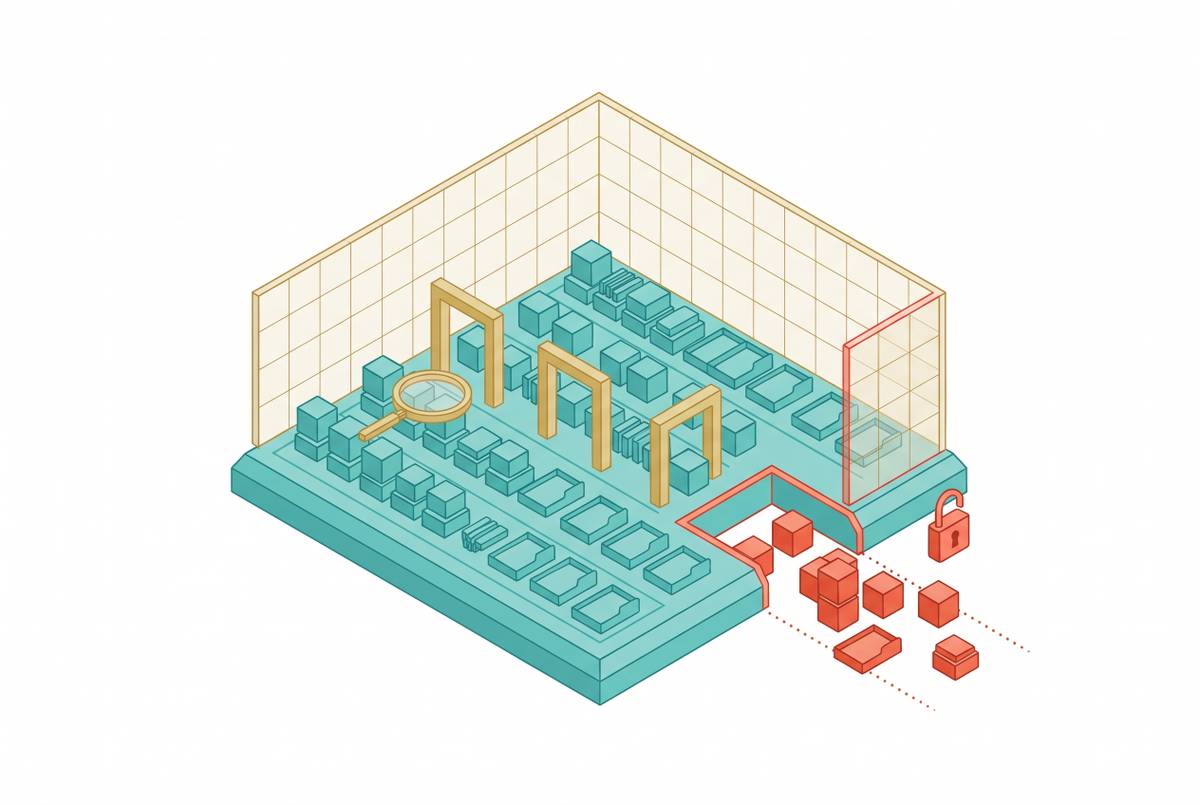
State Privacy Laws and Their AI Coverage Gaps
Most state AI laws target specific uses while missing broad algorithmic profiling.
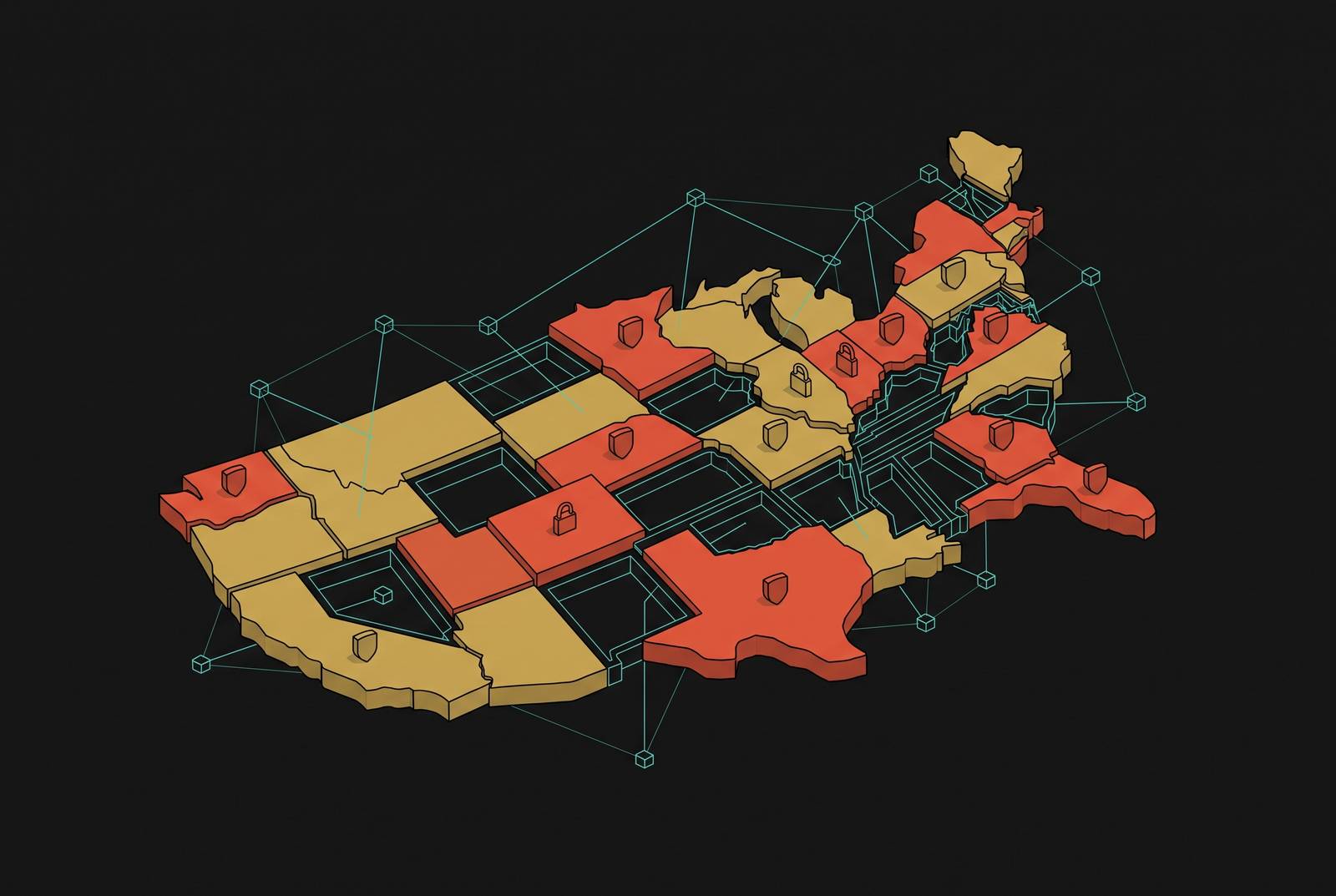
State privacy laws protect some uses of AI-processed data, but they do not provide a general framework for governing AI systems. Their coverage depends on the data involved, the activity performed, and the decision affected. Those boundaries leave predictable gaps.
Why state privacy laws were never designed to govern AI systems
State privacy laws begin with the collection and use of personal data. Their central concepts, including “profiling,” “automated decision-making,” and “sensitive data,” address data broker ecosystems and targeted advertising. They were not designed around machine learning pipelines or large language models. An AI system therefore enters these frameworks through a regulated activity.
A tool's particular use must meet a legal definition for the associated duty or right to apply. A law can govern the personal data supplied to a system without governing everything the system infers, generates, or decides. Adding AI-related provisions to that framework extends its reach, but does not erase its original boundaries.
What the current state-law landscape actually covers
Existing state laws provide concrete rights over several kinds of AI-adjacent processing. Colorado CPA § 6-1-1306 grants an opt-out right for profiling in decisions with legal or similarly significant effects. Section 6-1-1309 separately requires data protection assessments for processing that presents a heightened risk of harm to consumers. That assessment duty includes targeted advertising, data sales, sensitive data, and certain profiling. Its reach is therefore broader than automated decisions alone.
Connecticut CTDPA § 42-515 provides an opt-out for profiling in consequential decisions involving employment, credit, housing, and education. It covers automated decisions producing legal or similarly significant effects even when a human also participates. Virginia VCDPA also gives consumers an opt-out for profiling in decisions that have legal or similarly significant effects. Minnesota provides an opt-out for profiling in furtherance of automated decisions with those effects, including decisions involving employment, lending, insurance, housing, education, and healthcare.
State privacy laws also grant rights such as access, correction, deletion, portability, and opt-outs for targeted advertising and data sales. Together, these rights give consumers ways to learn about personal data use and exercise control over covered processing. They also place duties on organizations when their use of AI fits the definitions in the law.
The "substantially replaces" loophole in California's ADMT rules
California's finalized CCPA automated decision-making technology regulations took effect on January 1, 2026. Their scope turns on whether ADMT “substantially replaces” human decision-making. That threshold does not treat every contribution to a decision as equivalent to making it. Instead, the rules distinguish between a system that displaces human judgment and one that supports or influences it. The human role is the hinge on which coverage turns.
A recommendation, risk score, or ranked list can shape a decision without essentially removing the person making it. Such tools can therefore be structured to fall outside California's ADMT framework. Coverage turns on how much of the decision the human retains. This creates a scope gap within the rules themselves.
Timing adds a separate limit. Consumer opt-out rights under these regulations do not take effect until January 1, 2027, so the regulations' effective date does not mean those rights are already enforceable. The CPPA's superseded draft ADMT fact sheet also remained available on its website despite describing provisions deleted before adoption.
How advertising and behavioral profiling fell out of AI accountability rules
California's ADMT regulations also exclude advertising from the definition of “significant decision.” As a result, the heightened ADMT opt-out and access rights do not attach to AI systems that profile consumers for ad targeting, even at scale. Advertising was in earlier drafts but was taken out before the rules were adopted. This boundary reflects a deliberate regulatory choice.
The consequence is an asymmetry between different uses of consumer data. An in-scope AI system used to deny a loan falls within California's ADMT disclosure and opt-out obligations, subject to their applicable dates. AI used to build a behavioral profile that influences prices, product availability, or financial offers framed as advertising does not fall within that regime on the same basis.
General privacy protections can still apply to advertising excluded from AI-specific decision rights. Connecticut offers a useful contrast because its consequential-decision provisions can apply even when a human participates. That contrast shows how states draw different boundaries around automated influence. Neither the presence of AI nor the importance of its output supplies a uniform legal trigger.
Definitional fragmentation across states and what it means for the same AI tool
Colorado's AI Act, before repeal, covered insurance, essential government services, and legal services. Those areas are not included under California's CCPA ADMT regulations. An underwriting algorithm could therefore have fallen within Colorado's framework without falling within California's ADMT rules. The example is historical, but the distinction is concrete because the covered sector changes the legal outcome.
Other provisions attach obligations to different stages of an AI system's use. Connecticut's amendments to its Data Privacy Act require controllers to disclose in privacy notices whether personal data is used to train large language models. Yet the amendment does not define “train” or “large language model.” The disclosure obligation is explicit while the boundary around the activity remains uncertain. This is a different regulatory trigger from a consequential decision about a consumer.
Illinois SB 315 introduces another kind of obligation, with a January 1, 2027 effective date and an annual independent third-party audit requirement phasing in on January 1, 2028. Its frontier-model audit requirement has no equivalent in California, Colorado, or Texas. For a business operating across states, these differences form a matrix rather than a shared definition of high-risk AI. The same system may encounter a model audit, a training disclosure, or no AI-specific requirement, depending on which law applies.
Where state law has no reach at all: geographic holes and sector gaps
A difference in coverage is not the same as an absence of coverage. Some states have neither a comprehensive privacy law nor an AI-specific statute that reaches the processing at issue. In those places, consumers cannot rely on such a state framework to contest algorithmic use of their personal data. That is a narrower claim than saying no law of any kind could apply. The distinction matters because consumer protection and civil rights laws may address conduct outside an AI-specific regime.
Michigan's enacted AI laws focus on political deepfakes and nonconsensual intimate deepfakes. Its chatbot bill has not become law. Those targeted measures do not establish a general framework for AI-driven consumer profiling.
Illinois HB 3773 took effect on January 1, 2026, while Connecticut SB 5 has staggered effective dates beginning October 1, 2026. Colorado SB 26-189 and New York Local Law 144 also regulate AI in employment and hiring decisions. These laws differ in how they define terms, what assessments they require, and how they are enforced.
What enforcement signals reveal about the gap between legal text and actual protection
The CPPA's July 21, 2026 audit of gig economy platforms used existing privacy rights to look into algorithmic decisions. Conducted under Civil Code section 1798.199.40, the audit evaluated compliance with consumers' rights to access and exercise control over their personal information. The agency did not announce a broader audit of algorithmic decision-making requirements.
Chief Privacy Auditor Sabrina Ross explained the connection directly. “You cannot contest a decision made by an algorithm without the underlying data,” she said. Access rights can thus provide a route into an algorithmic dispute without relying on the newer ADMT opt-out provisions. But the right to access data is separate from the right to refuse automated processing.
The California Attorney General's September 9, 2025 announcement of a joint investigative sweep with Colorado and Connecticut provides another example. That action targeted non-compliance with a privacy opt-out signal, making an existing opt-out mechanism the enforcement anchor. Such actions show regulators working through duties already present in privacy law. These actions do not show that the duties in privacy law cover every harmful use of AI. California's “substantially replaces” threshold and Texas TRAIGA's “sole intent” standard still constrain the conduct their respective provisions can reach.
The preemption debate and what it means for whether the gaps will close
Whether states can expand this coverage is itself contested. The Trump administration has described the current landscape as “a patchwork of 50 different regulatory regimes” that burdens compliance. That framing supports federal preemption that would override state AI laws. The debate therefore concerns more than whether a national standard would be simpler. It concerns which level of government would retain the authority to respond when a gap appears.
The civil-society objection focuses on a federal ceiling. If federal law limits what states can do, states could lose the power to add protections as AI risks change. Existing gaps would then depend on federal action to close, rather than on changes to the state frameworks that created them. The concern is structural because preemption changes who can revise the rules.
A federal floor offers a different model. It would establish common protections while allowing states to exceed them, addressing the absence of a shared baseline without eliminating state responses to new harms. That would not necessarily remove every difference in compliance obligations. For organizations, the unresolved choice between a floor and a ceiling makes long-term planning harder. For readers assessing protection, the gaps mapped here remain the relevant reality, while whether they narrow or widen depends on a political contest still in progress.
What readers and organizations can take from the current legal map
For individuals, existing opt-out rights are meaningful but conditional. Exercising them requires knowing both that the right exists and that the system's use falls within its scope. A consequential decision may qualify where an advertising profile does not, and human participation may matter differently across states. The useful starting point is therefore the particular processing activity and applicable law, rather than a general assurance that AI is regulated.
For organizations, this overlap calls for privacy and AI governance to be treated as a single workstream. The same tool can bring an organization under privacy rules in one state and AI-specific duties in another, and the states may require some of the same assessments. More disclosure alone cannot resolve the underlying mismatch. Laws governing collection and profiling do not fully address every harm arising from what a system infers, generates, or decides.
Privacy-by-design responds to a different part of that problem. An architecture designed to process without retaining, infer without storing, and operate without building a data profile addresses exposure at the point where it would otherwise be created. That approach is not a claim that architecture can settle every question about AI decisions. A realistic view of AI-processed data starts with both what the law protects and what the system's design leaves exposed.