How AI Companies Monetize User Data Through Enterprise Licensing
Enterprises unknowingly consent to data harvesting through standard contract clauses.

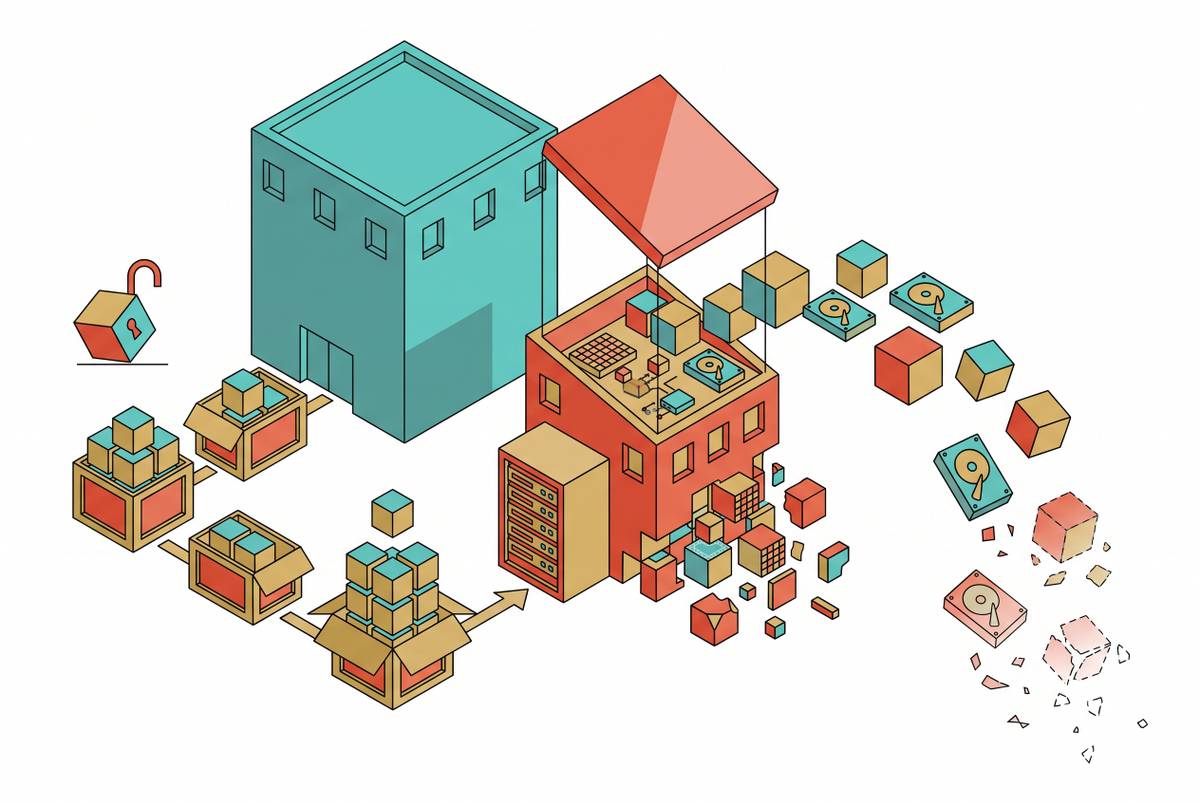
Enterprise AI licensing now runs on two separate monetization channels, and most companies signing these agreements only notice one of them. None of this requires bad faith on anyone's part. The mechanisms are structural, built into how contracts get written and how AI features get shipped, and the rest of this piece works through how each channel functions, where they overlap, and what exposure actually looks like for an enterprise sitting on both sides of the arrangement at once.
The two channels do not compete for the same explanation of what is happening. They run in parallel and reinforce each other. An enterprise might be the paying counterparty in one vendor's explicit licensing deal, supplying proprietary data for a negotiated fee, while simultaneously having its own operational data harvested through a different vendor's implicit clause, with no fee changing hands and no negotiation ever taking place. Understanding one channel without the other leaves half the exposure invisible.
Why AI companies now pay billions for training data rather than scraping it
The explicit licensing market did not emerge out of generosity. It emerged because the open web stopped being enough, and because scraping past that point started carrying legal consequences too expensive to ignore. Three forces pushed AI companies from scraping toward paying. The first was litigation risk: publishers including The New York Times sued over unlicensed training use, and courts handling these cases kept drawing a distinction between how the data was used and how it was acquired. That acquisition step is where AI labs kept losing ground, and a license converts a legal liability into a documented, defensible transaction there.
The second force was scarcity. Licensing is the only route into that material, and that scarcity is what gives rights holders leverage they didn't have when everything of value was already public.
The third force was momentum. Licensing stopped functioning as a cautious, defensive move and became the default path for any AI company that wanted to avoid years of litigation over a dataset it could have simply paid for.
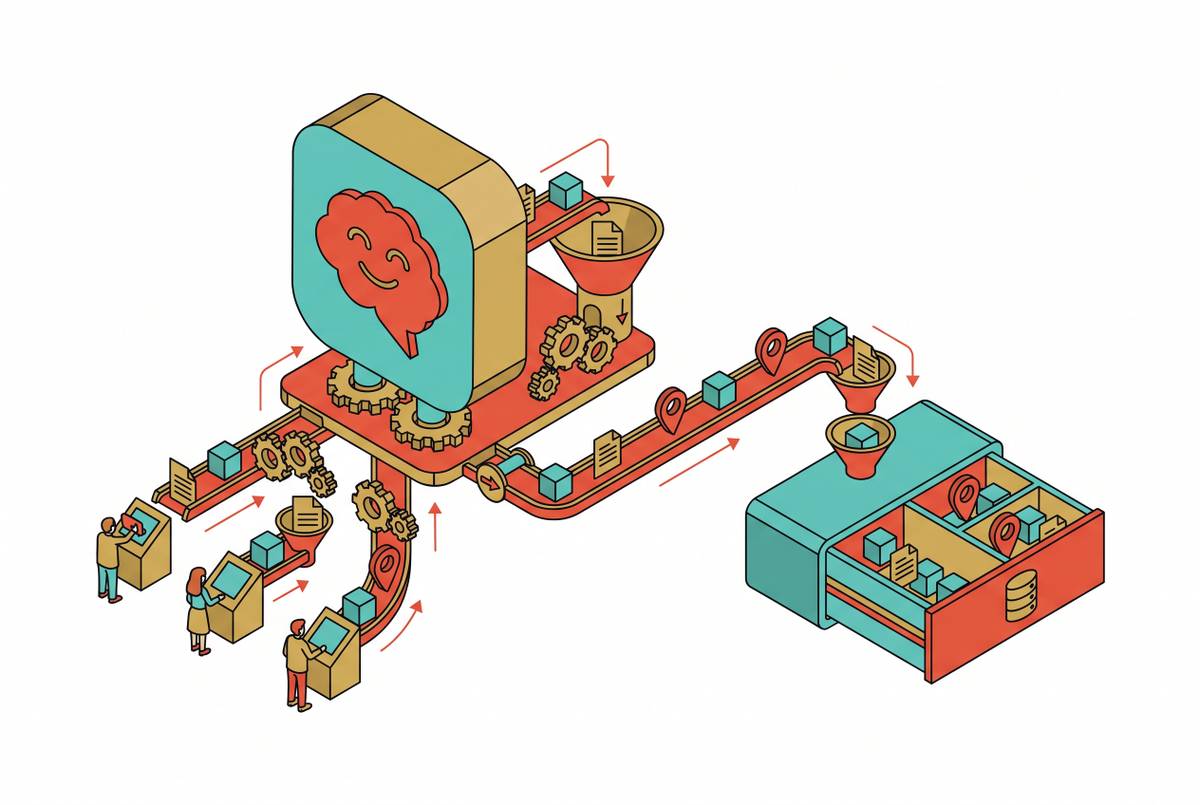
The newest and fastest-growing category inside this market is business data: support tickets, CRM records, project histories, transaction logs, workflows, and code, the operating history a company produces simply by doing its work. Labs building agentic AI need exactly this kind of material because none of it exists publicly, and no scraping operation can manufacture it. That category is also the kind of data sitting inside the enterprise contracts covered later in this piece. This is where the explicit and implicit channels start to connect. The market behind this has real scale. AI companies paid over $4 billion for licensed data in 2025, and that figure keeps climbing.
What explicit licensing deals actually look like: structures, prices, and what rights are granted
A genuine training data license is a specific legal instrument, and it answers five questions in writing that older content licenses were never built to address. The fifth is documentation, the per-asset paper trail that makes the license defensible if a dispute or due-diligence review ever tests it.
Reported deal structures fall into five recognizable models: a flat fee paid once or fixed across several years, a recurring annual license, usage-based pricing tied to how much the data gets drawn on, revenue share, and equity or hybrid arrangements that blend cash with other consideration. News Corp's deal with OpenAI, reported as a multi-hundred-million-dollar arrangement spanning five years, is at the high end of what a brand-name publisher can command. Google pays Reddit roughly $60 million a year, but mid-size publishers typically see single-digit millions annually at best. Shutterstock has reported substantial and growing data-licensing revenue, with year-on-year increases between 2023 and 2024, so even non-publisher content libraries have found a place in this market.
Reddit's arrangement also shows where the market is heading structurally: rather than selling a single archive and walking away, Reddit subscribes buyers to a continually refreshed live stream of posts through its API while separately licensing its archived historical posts for training. Wikimedia took a similar step toward formalizing what had been chaotic, uncompensated scraping. In January 2026, Wikimedia announced the Wikimedia Enterprise partnership, with Amazon, Meta, Microsoft, Perplexity, and Mistral AI named as customers of high-volume, high-speed access built for AI use. What had been free, informal scraping became a structured product with named customers and a transaction behind it.
The implicit channel: how standard contract clauses grant AI training rights enterprises never agreed to negotiate
The implicit channel does not rely on anything novel. It runs through contract language written before generative AI existed, and now that language gets read and applied to cover training and fine-tuning that nobody drafted the original clause to anticipate. Provisions that let a vendor "improve," "build," or "enhance" its product are standard boilerplate found across thousands of SaaS agreements, and that ordinariness is why they slip past review: nobody flags language they've seen a hundred times before, even when its practical meaning has quietly expanded.
The mechanism tends to follow a pattern. The setting that governs this is typically enabled by default, and the burden of discovering it and opting out falls entirely on the customer, not the vendor.
Figma's case shows this pattern working in practice. A proposed class-action lawsuit filed in California federal court in November 2025 alleged that Figma used customer designs and intellectual property without permission to train its generative AI tools, and that users were automatically opted in to having their data used for that training without being told. Figma has denied using customer data to train models without explicit authorization, and the dispute over what actually happened remains contested in court.
The FTC's action against Match Group and OkCupid shows what the same mechanism looks like once it crosses into regulatory territory. On March 30, 2026, the FTC settled allegations that OkCupid gave millions of user photos, along with demographic and location data, to an AI company that used the material to build facial recognition technology. The AI company receiving the data fit none of those categories, and users were never offered the opt-out the policy promised them.
What turns this from a legal footnote into a genuine business risk is how enterprise contracts typically define customer data. Once that data has gone into a model's weights, there is no contractual clause that pulls it back out. The next section turns to what the actual language enabling all of this looks like on the page, and why legal teams reviewing these contracts keep missing it.
Why Legal Review Keeps Missing the Contract Language
The language in enterprise AI contracts governing data rights survives standard legal review almost by design. The language is broad enough to apply to many situations at once, its placement inside the document is unremarkable, and its real scope only becomes visible once a reader interprets it against what generative AI training actually requires technically, something most legal reviewers are not trained to evaluate.
The scale of the issue across AI contracts specifically is substantial. A TermScout analysis found that a large majority of AI contracts claim data usage rights that go beyond what is necessary for delivering the service itself, far exceeding the rate found across contracts generally, and that a considerable number of these agreements allow vendors to use customer data for retraining models or even for competitive intelligence purposes.
Five locations in a typical contract tend to carry these rights, and each one needs to be checked individually. AI feature addenda often arrive mid-contract through updated terms of service, not through a renegotiated agreement. Subprocessor lists sometimes include AI training vendors without explicitly disclosing that training is what they're doing with the data.
The contract tier a company is operating under changes the exposure considerably. Enterprise and team licenses typically include an opt-out of training provision, and corporate legal departments treat this as a major selling point when they negotiate. That gap matters most where individual employees have adopted AI tools on personal or team plans outside the procurement process, so they carry exposure the enterprise legal team never reviewed, approved, or even knew existed.
Regulation has only partially closed this gap. No federal US law currently mandates consent before a company's data can be used for AI training. Until that changes, the contractual terms sitting inside each vendor agreement function as the primary, and often the only, protection an enterprise actually has.
How the licensing market's economics affect which enterprises face the most exposure
Exposure across these two channels is not distributed evenly, and understanding where the risk concentrates matters more than treating it as a generic threat facing every enterprise equally. The explicit licensing market pays rights holders who hold genuine negotiating leverage: brand-name publishers, large platforms, and content libraries with the scale and legal resources to negotiate serious terms. Mid-size publishers earn single-digit millions annually at best, and most serious analysis of this market concludes that the long tail of small and mid-size content owners will see no meaningful revenue from it. That leaves the implicit channel as the route through which the vast majority of enterprise data, generated by companies with no leverage to negotiate anything, flows to AI companies without compensation or consent.
For a typical enterprise SaaS customer, the imbalance is structural. The enterprise customer on the other end usually has neither the negotiating leverage to change standard terms nor, in many cases, the visibility even to know the extraction is happening.
The business data category introduced earlier as the fastest-growing segment of explicit licensing adds weight to this picture. Google's reported ten-million-dollar bid for Spirit Airlines' archive put a public, concrete price on one company's operating history, the kind of transaction records and operational data that sit inside nearly every enterprise's own systems. That price signals what the market has decided is valuable: the day-to-day data enterprises generate by doing their work. If that data is worth real money on the open market, the same category of data is flowing out through implicit contract clauses for nothing.
Sector matters here too. Enterprises operating in these regulated industries are holding the most valuable data in the market while simultaneously operating under the legal frameworks where unauthorized use of that data carries the greatest exposure. That combination makes contract-level diligence considerably more urgent for a hospital system or a bank than for a company whose operational data has no comparable market value.
Litigation is escalating without resolving the underlying legal question
The legal question sitting underneath both channels remains open. Whether training an AI model on copyrighted or proprietary material qualifies as fair use, or requires a negotiated license, has not been settled definitively by US courts, and nothing currently moving through the court system looks likely to settle it quickly.
Publishers have made their own economic argument against waiting for that resolution.
The litigation timeline keeps lengthening. The New York Times filed suit against OpenAI and Microsoft in December 2023, and the case survived motions to dismiss on its core copyright infringement claims, though some DMCA and unfair competition claims were dismissed along the way. USA Today Co. and several local newspapers it owns filed suit against OpenAI on October 8, 2026, alleging the company copied hundreds of thousands of their articles to train its models and seeking damages of more than $250 million.
Even the deals already signed remain contested in their own structure. Media strategist Paul Bannister, quoted in Digiday, said publishers "took the check, but realized that money wasn't going to save their business in five years. Even the explicit market, the side of this story that looks resolved and transactional, is still being renegotiated by the people inside it. Waiting for courts to settle the underlying question before taking contractual precautions is not a strategy available to any enterprise managing real exposure today, because the contractual protections already sitting inside vendor agreements are more immediately actionable than any ruling likely to arrive soon.
What enterprises can do now to audit and limit their exposure across both channels
Exposure across both channels is reducible, coming down to contract review, procurement policy, and in some cases a different architectural choice. The question facing most enterprises is not whether to use AI tools at all, but which tools to use and under what terms.
Contract audit work should start with locating and flagging every "product improvement," "aggregated data," and "service enhancement" clause across current AI vendor agreements, then confirming whether enterprise-tier agreements include an explicit opt-out of training provision, and verifying in the vendor's administrative settings that the opt-out has actually been exercised. Shadow AI adoption is often the largest blind spot in organizations with otherwise solid enterprise agreements, so it's worth auditing which employees are using free or individual-tier AI tools that lack any training opt-out provision.
On the procurement side, new AI vendor agreements should require explicit training data clauses rather than accepting generic "product improvement" language as sufficient. And for regulated-industry data, health, financial, legal, the same third-party sharing standards applied to any other data processor should apply equally to AI vendor subprocessors.
An enterprise that needs real AI capability without accepting the data trade-off built into the standard SaaS model can also consider a different architectural option, one that is a meaningful choice and is earned only after working through the contractual mitigations that come before it.